recently featured posts we've got 673 articles so far

Stand Up Paddle Surfing –
Now Official
0
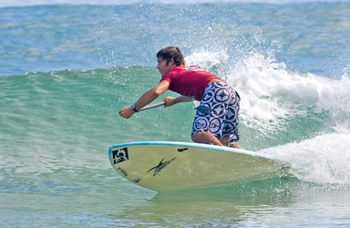
Stand Up Paddle Surfing to be included in Surfing Australia’s Australian National Titles

UPDATE: It was firstly paddleboards. Then stand up paddleboards (SUP). Now outrigger canoes have been added to the line-up for the annual Honolua Ocean Paddle Race. (check the full story here)

Australian Titles will this year be decided for the first time in the rapidly growing and now well established discipline of Stand Up Paddle (SUP) Surfing.

Surfing Australia announced the inclusion of the Open SUP division into the Country Energy Australian Surf Festival to be run at Port Macquarie during August.

Globally, Stand Up Paddle Surfing has grown in popularity incredibly over the past three years with an abundance of surfers, longboard and shortboard surfers, including a stand up paddleboard in their essential quivers and many dedicating themselves 100% to this discipline.

“The quality of Stand Up Paddle surfers emerging throughout Australia and the world is exciting and there’s many past and present champions of the sport of surfing now very competent and devoted Stand Up Paddle surfers” said Surfing Australia Chief Executive Officer Andrew Stark.

“Take the two finalists at the recent Rip Curl Pro at Bells Beach, Joel Parkinson and Adam Robertson, both often seen in the line up riding waves on Stand Up Paddleboards, and then look at past champions like Luke Egan, Tom Carroll and Simon Anderson, all keen riders” added Stark.

“Stand Up Paddle Surfing has established itself in our sport and we are delighted to incorporate it into our Australian Surfmasters this year – the inaugural champion will take a special place in surfing’s history!”

Judging criteria for the Stand Up Paddle surfers have been formulated by the International Surfing Association with an emphasis on use of paddle in performance surfing and radical manoeuvres. The criteria will shortly be available through via www.surfingaustralia.com

Twelve surfers will make up the division this year, three from host state NSW, two from Qld, Vic, SA and WA and one from Tasmania.

The Country Energy Australian Surfing Festival, which incorporates the Oxbow Australian Longboard Titles along with the Australian Surfmasters will run from August 16 through to August 29 as a mobile event through the surf rich region surrounding Port Macquarie.

Surfing NSW will host the event and a full Surfing Australia digital media team will service the event with daily digital images, press releases, live web scores, web highlight vision and selected days national television newsfeeds.
story via

Surfing While Sick “Is OK” 0

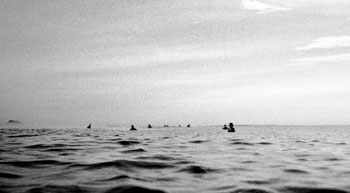
A champion surfer has caught a break in more ways than one, with the Industrial Relations Commission in Australia finding that going surfing while on sick leave is not a sackable offense.

Shane Bevan, a former world championship tour surfer, was sacked from his baggage handler’s job after his then employer discovered he took part in Queensland’s Coolum Classic surf contest while on sick leave with a bad back, the Australian reported.

The IRC initially upheld his sacking but, on appeal, a commission full bench last week supported Bevan’s claim that the termination was harsh, unjust and unreasonable and ordered the company to pay compensation.

Bevan injured his back while working for Oceania Aviation Services.

Bevan saw an osteopath who issued him with a medical certificate covering the period to Sunday, September 16, 2007. While on leave, his grandfather died and he travelled to Sydney to be with relatives before returning home two days later.

In memory of his grandfather, he decided to compete in the Coolum Classic  of which he was the reigning champion  scheduled for the next day.

The day he surfed was a rostered day off; his back had improved and he revisited his osteopath, who was happy with his progress.

He spoke to his work supervisor to check someone was taking his shift on the Sunday, although this was unnecessary given he had a medical certificate that covered the period to and including the Sunday.

Upon returning to work on the Monday,  Bevan was asked what he had been doing. He referred to his grandfather’s death and the visit to Sydney.

Asked if he had been surfing, he replied that he had been for a “bit of a paddle”. His employment was terminated.

The Australian reported that the commission upheld the sacking, finding  Bevan misled the company about his physical capabilities and did not acknowledge he had been in the surfing contest when first asked.

However, a commission full bench overturned the findings, noting  Bevan participated in the surfing tournament on his regular rostered day off.

“He went surfing in his own private time and not during a time when he was rostered to attend work,” the full bench said.

“It is also important to note that  Bevan, after organising a shift swap on the Sunday, (despite being covered by a medical certificate) attended work on the Monday (his next rostered shift) ready and able to perform the full range of his duties.”

After lengthy evidence about which muscles  Bevan used at work and which he used surfing, the full bench noted the osteopath did not agree that  Bevan had put his injury at risk by surfing.
Ad Feedback

The osteopath’s evidence did not support a conclusion that  Bevan was fit to resume work in light of his participation in a surfing competition.

Bevan also did not mislead the company about his fitness to resume normal work, given it involved heavy lifting.

story via

LA Beaches In Need of Quality Control 0

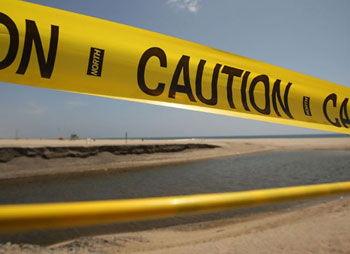
Last week Heal The Bay released their 19th annual Beach Report Card, and the report finds that the City of Angeles holds the unenviable distinction of possessing the most polluted beaches in California. Oh boy! With A-to-F letter grades assigned to 94 beaches, 15 of them received year-round F grades, with six ranking in Heal the Bay’s annual Beach Bummer List of the most polluted sites in the state. The good news—if there is any—is that 70% of sites earned A or B grades, a state-low total for the fourth year in a row and nearly even with last year’s 71% tally. You can thank chronically polluted beaches in Malibu, Santa Monica, Avalon and Long Beach for dragging down the county’s overall grades.

“You go surf around here and sometimes the water just stinks, you can tell something’s not right. It’s gross,” says Theodore Sawyer, an L.A.-area surfer who just moved from the pristine Monterey Bay area to the not-so-pristine Venice Beach. “You’d think a place who’s image is based on the beach would be more into preserving the environment.”

That being said, there are alternatives our there. Proving that Orange County is home to more than just scandalous housewives, O.C. beaches recorded outstanding water quality grades, well above the state average. Some 97% of 103 monitoring locations received an A or B during the summer, as well as 93% for year-round dry weather.

And just north of L.A.—where, in the words of Sam George, a man can be free—Ventura County also seems to be taking care of its coast. Of the 53 beaches monitored, 51 locations received A grades. Moving up the coast, more than 90% of Santa Barbara and San Luis Obispo beaches earned A or B grades during year-round dry weather. Santa Cruz saw 83% of its beaches record A grades year-round. Further north, San Mateo notched perfect 100% A grades at its 11 sites, while San Francisco earned 93%. Marin, Mendocino and Humboldt counties earned perfect 100% summer grades, while Sonoma recorded A or B grades for more than 85% of its beaches.

Of course, with the good has to come the bad, and as of press time Ventura has ceased ocean testing at all beaches since October in the wake of the state budget crisis, which eliminated all funds to support counties’ regular ocean testing. Orange County officials also may decrease sampling if state funding isn’t made available by July.

“With summer coming, the state has made assurances that it will start restoring funding to beach monitoring programs, but there is no firm date,” said Mark Gold, president of Heal the Bay. “Until then, swimmers in many locations in greater Southern California are truly swimming at their own risk.

Most California beaches had very good water quality with 262 of 307 (85%) locations receiving very good to excellent (A and B) grades, while only 32 of the beaches (6%) monitored statewide received D or F grades. High bacteria counts at these sites are linked to such potential illnesses as stomach flu, ear infections and major skin rashes.

The Top 10 Beach Bummers
Twenty-three beaches statewide received an overall “F” grade in year-round dry weather during the 2008-2009 Beach Report Card. The ten worst “Beach Bummers” in California (starting with the worst) are:

  1. Avalon Harbor Beach on Catalina Island (Los Angeles County)
  2. Cabrillo Beach harborside (Los Angeles County)
  3. Pismo Beach Pier (San Luis Obispo County)
  4. Colorado Lagoon (Los Angeles County)
  5. Santa Monica Municipal Pier (Los Angeles County)
  6. City of Long Beach at LA River outlet (Los Angeles County)
  7. Poche Beach (Orange County)
  8. Surfrider Beach at Malibu Creek (Los Angeles County)
  9. Campbell Cove State Park Beach (Sonoma County)
  10. Doheny Beach at San Juan Creek (Orange County)

For a detailed look at beach results for each county and report methodology, please refer to our complete report. A PDF version is available at www.healthebay.org

Honor Roll Some 79 of the 324 (24%) beaches with year-round dry weather grades this year scored a perfect A+. These beaches had zero exceedances of state bacterial standards for ocean water quality throughout the entire time frame of this report. Heal the Bay proudly places these beaches on our inaugural Beach Report Card Honor Roll. A list of these locations can be found in the full report.

story via