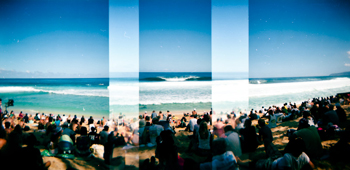
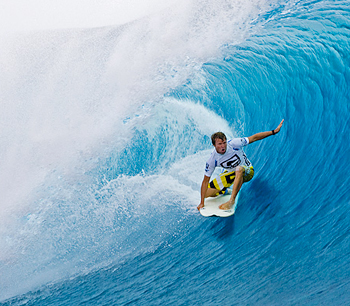
The ocean is getting crowded: Fishermen are competing with offshore wind projects, oil rigs along with sand miners, recreational boaters, liquefied gas tankers and fish farmers. So a growing number of groups — including policymakers, academics, activists and industry officials — now say it’s time to divvy up space in the sea.
“We’ve got competition for space in the ocean, just like we have competition for space on land,” said Andrew Rosenberg, a natural resources and environment professor at the University of New Hampshire who has advised Massachusetts on the issue. “How are you going to manage it? Is it the people with the most power win? Is it whoever got there first? Is it a free-for-all?”
To resolve these conflicts, a handful of states — including Massachusetts, California and Rhode Island — have begun essentially zoning the ocean, drawing up rules and procedures to determine which activities can take place and where. The federal government is considering adopting a similar approach, though any coherent effort would involve sorting out the role of 20 agencies that administer roughly 140 ocean-related laws.
“It’s really an idea whose time has come, and it’s one of my top priorities,” said Jane Lubchenco, who chairs the National Oceanic and Atmospheric Administration. “By focusing on different sectors, nobody is paying attention to the whole — in particular, the health of the system.”
But conducting what experts call “marine spatial planning” presents scientific and political challenges, since so little of the ocean has been mapped in detail, and so many interest groups want to use it. The federal government has mapped only 20 percent of the “exclusive economic zone” that stretches from the U.S. coast out 200 nautical miles, and that’s just its geophysical bottom, not the habitats and species that exist at varying levels.
Charlie Wahle, a senior scientist in NOAA’s National Marine Protected Area Center, said the agency is convening experts in California to chart how groups including kayakers, the Coast Guard and fishermen use waters off the state’s coast. “People have been surprisingly willing to engage and share their information and knowledge of the way it really is, as opposed to how it may look on maps,” he said. “We’re on the right path, but it’s not a simple thing.”
Marine ecologist Larry Crowder, one of several scientists at Duke University who have compiled data for such plans, said the approach makes sense because ocean resources are not “equally distributed, whether it’s oil and gas, or fish, or corals.” But he added that the sea has so many overlapping activities that “when you begin putting these maps together, as we’ve done, it quickly becomes a train wreck.”
The states pioneering this approach have charted different paths. California is establishing marine protected areas along its 1,100-mile coastline under its 1999 Marine Life Protection Act, dividing it into five regions and brokering agreements with interest groups. Massachusetts, which enacted its Ocean Act only last year, is to finalize a comprehensive ocean management plan by Jan. 1 that exempts fisheries but covers all other major activities.
Ian Bowles, Massachusetts secretary of energy and environmental affairs, said the state is working to determine “what are the areas of particular ecological value that we should be protecting from other uses” and what parts of the ocean can accommodate such diverse concerns as liquefied natural gas offloading terminals, wind projects and sand mining for restoring eroding beaches.
While a few states are leading the way in the United States, the Europeans and Australians have done this for years. Charles Ehler, a Paris-based consultant who is drafting a manual on the subject for UNESCO, the U.N. Educational, Scientific and Cultural Organization, said the demand for offshore wind farms and other activities has spurred countries such as Belgium, Germany, Norway and the Netherlands to establish specific marine boundaries.
“There’s a much greater intensity of demand for offshore space in Europe than in most of the United States,” said Ehler, noting Belgium’s demand exceeds its available space by 200 to 300 percent.
Even though they have a head start, policymakers overseas are struggling with many of the same questions Americans are contemplating, including how to reconcile new and traditional ocean uses, and how climate change will affect where marine species live. With the exception of Norway, few nations have been willing to subject fisheries to the same management regime as such activities as renewable energy and gravel mining.
“The traditional users of the sea have been the most resistant to marine spatial planning, because they’ve pretty much been free to go where they want to go and do what they want to do,” Ehler said.
While California includes the fishing industry in its planning process, Massachusetts fishermen held up passage of the state’s Ocean Act until they were reassured they would be exempt. “We don’t want to be told, ‘Oh, and this place — you can’t go here anymore,’ because we were there all along,” said Bill Adler, executive director of the Massachusetts Lobstermen’s Association. He added that the fishing industry is already regulated separately by the state.
Some U.S. oil and gas executives have adopted a similar stance, arguing that any offshore drilling projects must undergo a federal environmental assessment. “I don’t think the overall process is broken,” said Marvin Odum, president of Shell Oil Co., adding that when he hears of calls for additional ecological reviews, “From where I sit, some of it can just look like delay tactics.”
But as the country appears poised for a new push in offshore oil drilling, advocates such as the Ocean Conservancy’s Vikki Spruill argue it needs to take a more serious look at how it coordinates activities off its coasts. “We wouldn’t put a coal plant in a national park,” Spruill said. Philippe Cousteau, president of the nonprofit EarthEcho International, said policymakers should put environmental considerations “first and foremost” when deciding where to locate new drilling activities.
Mary Gleason, the Nature Conservancy’s senior scientist and lead planner for marine protected areas in California’s central and north central coastal regions, said “there’s a lot of drama” when the universe of users is included in ocean planning. “There’s been a negotiated solution in all of these cases, where there’s been a lot of give-and-take,” she said.